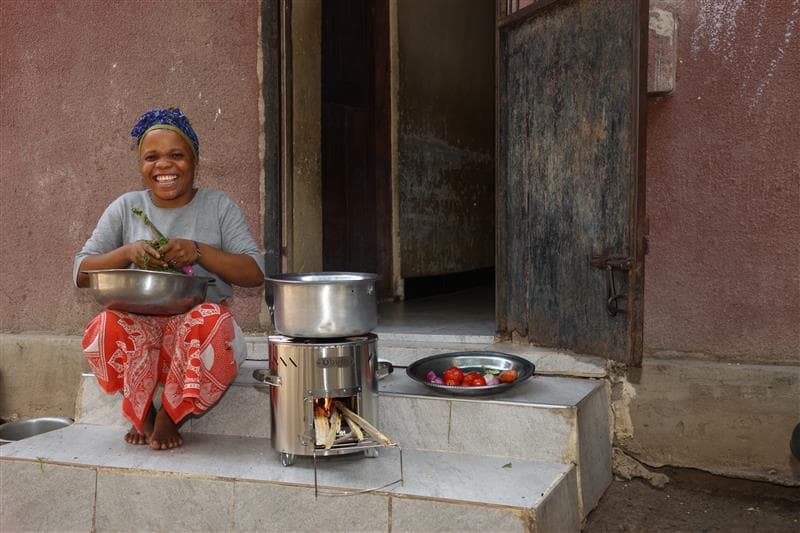
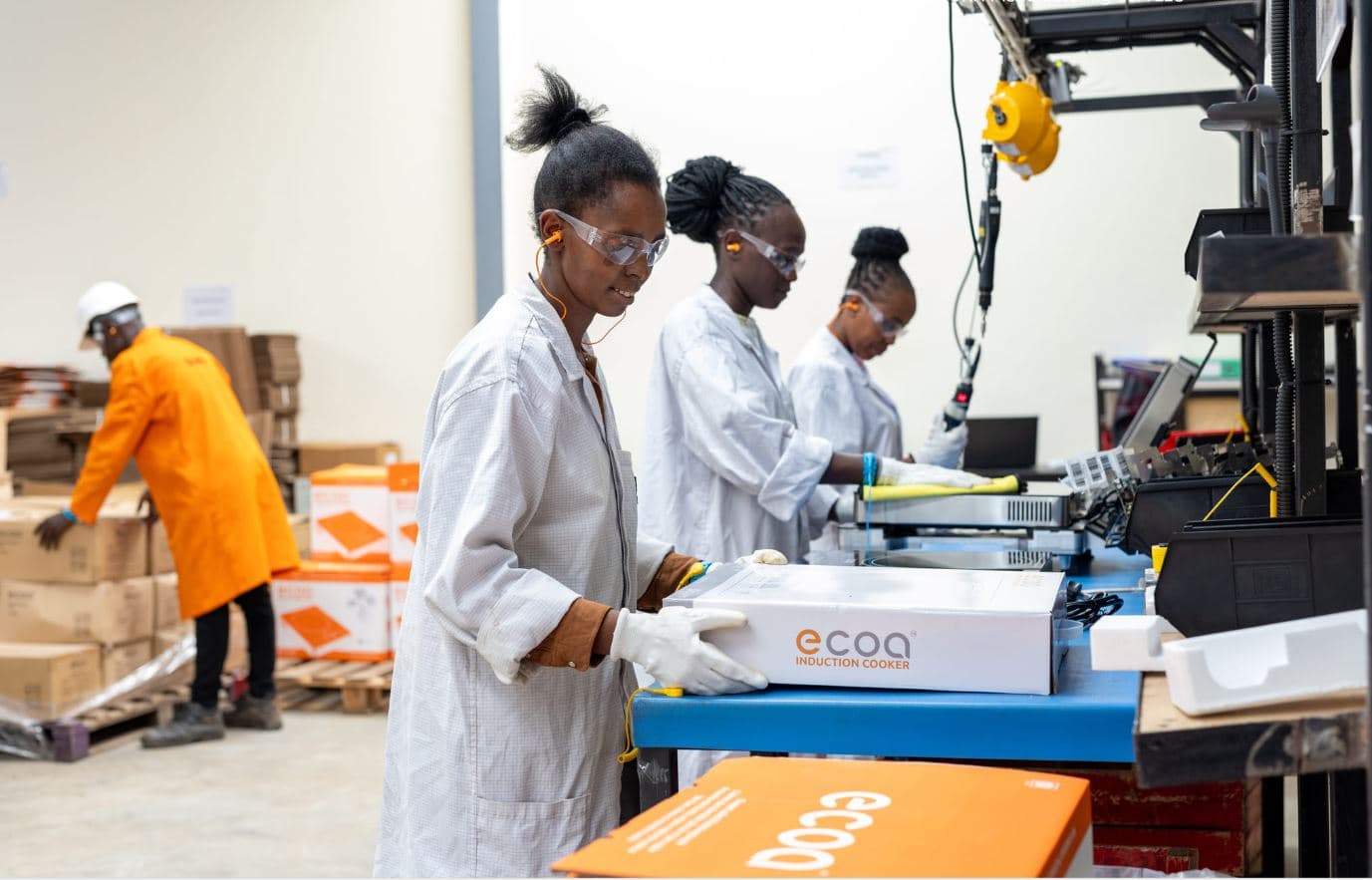
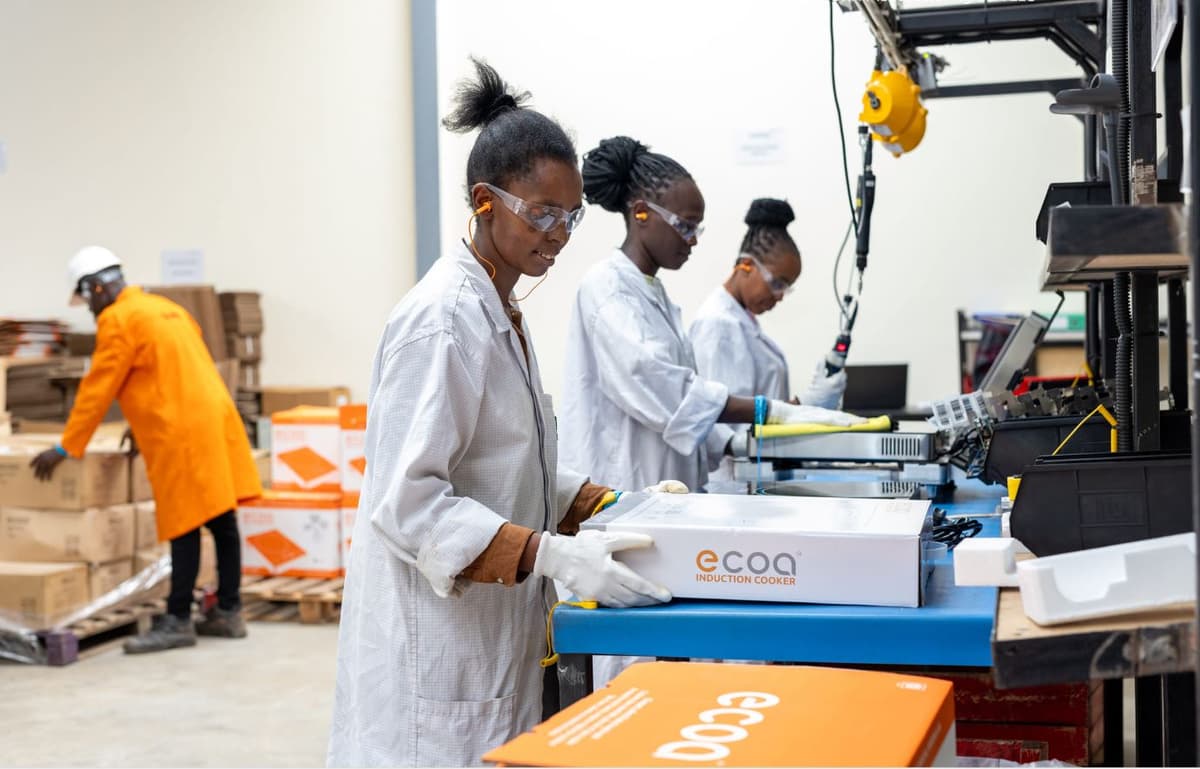
New research from the University of Pennsylvania and the University of Chicago suggests that some high-efficiency charcoal cookstoves can deliver significant emissions reductions at remarkably low cost, putting clean cooking among the most cost-effective climate interventions studied to date. At the centre of the research is BURN’s ECOA Char, also known as the Jikokoa, a high-efficiency charcoal stove used by households in Kenya.
When the world talks about climate solutions, the conversation often focuses on big technologies and ambitious transitions: electric vehicles, renewable energy, batteries, and large-scale infrastructure.
But what if one of the most cost-effective climate interventions is something far more ordinary?
A cookstove.
The researchers, Dr. Susanna Berkouwer and Dr. Joshua Dean, conducted a Randomized Controlled Trial involving 955 households in Nairobi. The study examined whether financial subsidies encouraged households to adopt the improved stove and whether doing so actually reduced charcoal consumption and carbon emissions.
The findings are striking. The researchers estimate that cookstove subsidies can abate carbon at a cost of just a few dollars per tonne of CO₂e, with estimates ranging from $3.50 to $8.10 per tonne.
That puts clean cooking firmly in the conversation about where climate finance can achieve the greatest impact.
Cost matters when tackling climate change.
Governments, companies and climate funds have finite resources, making the question of how much emissions reduction can be achieved for each dollar increasingly important.
The Nairobi study found that improved cookstoves can deliver significant emissions reductions at relatively low cost. The researchers estimate that every dollar spent subsidising cookstoves can abate between 168 and 383 times more CO₂e than a dollar spent subsidising electric vehicles, depending on the assumptions used. While the study estimates the cost of the cookstove subsidy at approximately $7 per tonne of CO₂e abated, this should not be taken as an indication of the price of the resulting carbon credits. The value of a high-integrity carbon credit reflects not only the underlying cost of emissions abatement, but also the substantial value that carbon finance delivers to households by enabling access to clean cooking technology and its associated economic, health and environmental benefits.
The comparison is not an argument against electric vehicles. Instead, it raises a broader question for climate finance:
Where can each dollar deliver the greatest emissions reduction?
The research suggests that clean cooking deserves a much larger place in that conversation.
A climate solution that people keep using
A climate intervention only works if people continue using it.
The Nairobi study provides encouraging evidence on that front. 83% of households that purchased the improved stove were still using it 3.5 years later.
The researchers also found that a single stove avoided approximately 1.7 tonnes of CO₂e per household per year.
That combination of impact and durability is important. A technology can promise substantial emissions reductions, but those benefits mean little if households stop using it after a few months.
The findings suggest that high-efficiency cookstoves can become a lasting part of household cooking practices, while continuing to reduce the amount of charcoal required.
Why charcoal efficiency matters
For millions of households across Africa, charcoal remains an important cooking fuel, particularly in urban areas. Its widespread use also makes charcoal a significant contributor to greenhouse gas emissions, from the production of charcoal through to its use for cooking.
Addressing charcoal use is therefore an important part of reducing emissions from cooking. This can be achieved in different ways: by helping households use charcoal more efficiently, reducing the amount of fuel needed to prepare everyday meals, or by supporting a shift to cleaner cooking fuels and technologies.
Improving efficiency can offer a practical pathway for households that continue to rely on charcoal, while fuel switching can help reduce charcoal dependence altogether. Both approaches have the potential to cut emissions, reduce pressure on forests and lower the amount households spend on cooking fuel.
Using less charcoal reduces household spending on cooking fuel while also reducing the amount of biomass required to meet everyday energy needs. At scale, those savings translate into lower emissions and less pressure on forests.
BURN's own monitoring across its Kenya portfolio has shown similar patterns, with households reducing charcoal consumption by an average of 43%, while between 71% and 83% of stoves remain in active use across monitoring periods.
Why subsidies matter
One of the most important questions in climate finance is whether an intervention would have happened without financial support.
The study directly examined that question.
Researchers offered households different levels of subsidy and tracked their charcoal consumption using multiple independent measures over more than three years. This allowed them to assess both additionality, whether the subsidy actually changed households' purchasing decisions, and impact, whether adopting the improved stove changed household charcoal consumption.
The research found that higher subsidies significantly increased adoption.
That matters because upfront affordability remains a major barrier to cleaner and more efficient cooking technologies. A stove may save a household money over time, but the initial purchase price can still be difficult for lower-income households to manage.
Carbon finance can help close that gap by making high-quality cooking technologies more accessible while supporting measurable emissions reductions.
What this means for Africa's energy transition
The findings also raise an important question about the future of cooking in Africa.
Electric cooking has enormous potential as electricity access expands and power systems become more reliable and affordable. But millions of households will continue to rely on charcoal and other biomass fuels during the transition.
That means the shift to cleaner cooking does not necessarily have to be an either-or choice.
Africa can expand access to electric cooking while also deploying high-efficiency technologies that dramatically reduce fuel consumption among households that continue to use charcoal.
The climate challenge is too large to depend on a single solution. The most effective approach may be to support technologies that can deliver meaningful emissions reductions today while investing in the energy systems of tomorrow.
A bigger climate opportunity
What makes this research particularly significant is that it was conducted in real households over more than three years. It shows not just what an improved cookstove can achieve in theory, but what happens when households adopt and use the technology as part of everyday life.
The potential climate impact is substantial. The researchers estimate that if charcoal-using households globally responded similarly to those in the study, widespread adoption of improved cookstoves could potentially abate more than 90 million tonnes of CO₂e annually. While the findings come from one city and one fuel and should not be extrapolated uncritically, they demonstrate the scale of the opportunity to reduce emissions from charcoal use.
Importantly, the findings are consistent with BURN’s experience across its own clean cooking projects, where the same stove technology has demonstrated strong household adoption, sustained use and fuel savings across multiple markets. Together, this evidence points to an important opportunity: clean cooking solutions that are proven to work in households can deliver meaningful climate impact when deployed at scale.
For climate funders, policymakers and carbon market participants, the priority should therefore be to direct more capital towards interventions that can demonstrate real-world emissions reductions and to support their expansion into the millions of households that continue to depend on charcoal.
Tackling charcoal use will require more than one solution. More efficient charcoal technologies can reduce fuel consumption for households that continue to rely on charcoal, while fuel switching can help reduce charcoal dependence altogether. Both approaches can contribute to lowering emissions from cooking.
The climate sector does not always need another breakthrough technology. Sometimes the bigger opportunity is to take solutions that already exist, make them affordable, prove that households will use them, and scale them.
Clean cooking offers exactly that opportunity, and it is time to treat tackling charcoal use as a much bigger part of the global climate agenda
Explore the research
Discover the research behind these findings and learn more about how high-efficiency cookstoves can contribute to climate action, household savings and a cleaner cooking future in Africa.
Read the full study here.
Interested in going beyond the research? Talk to our team about purchasing high-integrity clean cooking credits and securing climate impact backed by real-world data and rigorous monitoring.